

Key Takeaways
- The Richardson 256 is the fly shop and freshwater default: 85/15 cotton and nylon with a UPF 50+ rating in the fabric itself.
- Lodges and waterfowl outfitters get the same shape in seven camo prints on the Richardson 256P.
- Leather patch sells on the shop wall, flat embroidery outfits the guide fleet, and PVC or sublimated patches handle salt water and full-color art.
- Order patch hats about eight weeks before opening day and embroidered hats about five.
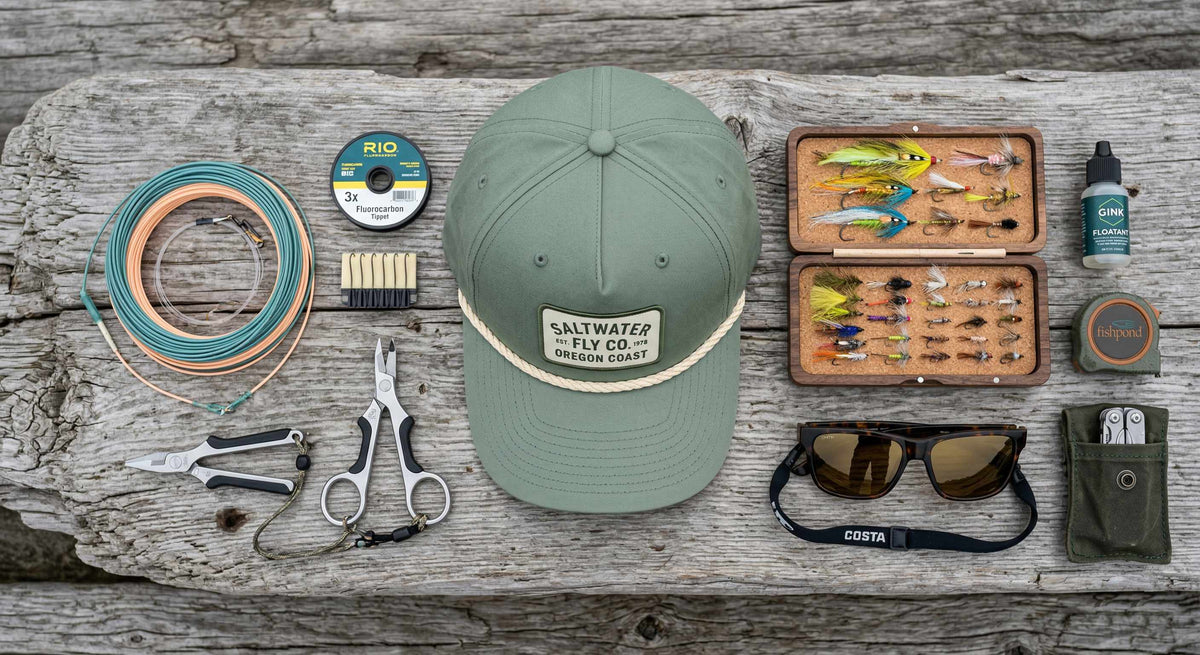
Walk into a fly shop and look at the hat wall. The pattern repeats from Montana to the Gulf Coast. One or two rope hat styles come in a dozen colors at one price, with the shop's own mark on the front. One Southeast fly shop builds its shop hat on the Richardson 256, the same hat this guide recommends first.
A fishing rope hat with your logo is the same idea. Pick the hat, pick what carries the logo, and order early enough to have it on the counter or the boat by opening day. This guide settles those three decisions for fly shops, guide fleets, waterfront retailers, and lodges, with every hat fact taken from the maker's spec sheets.
Table of Contents
- Why Fishing Brands Choose Rope Hats
- Who Orders Fishing Rope Hats, and What Each Program Needs
- Which Fishing Rope Hat Fits Your Program?
- Which Patch or Thread Holds a Fish Logo?
- When to Order Fishing Rope Hats Before the Season
- Frequently Asked Questions About Fishing Rope Hats
- Put Your Logo on the Water
Why Fishing Brands Choose Rope Hats

A rope hat is an all-fabric cap with a braided cord stitched along the seam where the front panel meets the bill. On the water that build does two jobs. It reads like an outfitter that has been on the river a while, and on the right hat it carries a real sun rating.
A performance cap says athletic, which is right for a tournament jersey and wrong for a fly shop or an old lodge. A trucker hat's mesh back reads Americana roadside. The fabric back and the cord put a rope hat closer to old guide photos than to anything athletic. Our vintage rope hats guide covers what makes a rope hat read heritage, and the rope hat guide covers the styles and every customization method.
The sun rating is the second job. The Richardson 256 Umpqua carries a UPF 50+ rating on its 85/15 cotton and nylon fabric. A garment rated UPF 50 blocks over 98 percent of UV rays and, unlike sunscreen, is not affected by sweat or water (Australian Prescriber, 2025). Orvis, Simms, and Skwala each sell a rope hat in their own fishing lines for that reason.
That rating matters to the people who wear these hats for a living. In a fly fishing forum thread on skin cancer this summer, a Yosemite guide wrote that they are in the sun every day, all day. Another angler said the thread was the push to wear a full-brim hat, then admitted not liking how it looks. A UPF-rated cap is the middle ground.
Asked for the best fishing hat, the same forum put sun protection first and then named the hat already on their heads. It was "the oldest, sweatiest one you got". A fishing hat gets worn until it falls apart, which is the whole case for putting a shop or guide logo on one. If you already know the look, you can browse custom rope hats now and come back for the hat and method choices below.
Who Orders Fishing Rope Hats, and What Each Program Needs

Four kinds of buyers order fishing rope hats: fly shops, guide and charter services, waterfront retailers and marinas, and hunting and fishing lodges. Each one measures the hat differently, so the hat and the method differ too.
Fly shops: the retail wall
A shop hat has two jobs. It is revenue at the counter, and it is advertising every time a customer wears it to another river. The fly shop walls we looked at in September 2026 follow one pattern. One rope hat comes in many colors at one price, with a leather patch or an embroidered mark on the front.
Leather patch is the shelf piece because it is the one a customer picks up and touches. A flat-embroidered version of the same hat covers the shop's own staff. Per-hat pricing depends on the hat, the method, and the quantity in a design, and it drops as the quantity grows. That is why a shop usually runs its first order across several colors of one hat rather than one color of several.
The forum thread above also had a reply mocking brand prices for a trucker hat that matches an expensive net. Another angler missed a free feed-company hat they had worn for years. A shop hat that gets worn that long is the advertising.
Guide and charter fleets
A fleet hat has one requirement: every guide in the same hat with the logo in the same place. The same hat has to be there again when a new guide starts in July. Flat embroidery is the practical choice. Thread takes daily sun, sweat, and a dunk without a patch edge to lift, and a reorder uses the same design as the first run.
There is no minimum on any customization method, so a two-hat reorder for new hires is a real order. Mixed fleets still price together. Hats that share the same design, method, size, and placement count as one design for volume pricing, across hat colors and styles. A navy 256 for the trout guides and a camo 256P for the duck guides can carry one embroidered logo in one design.
Waterfront retailers and marinas

Tackle shops, marinas, surf shops, and coastal gift stores run branded hats as seasonal stock. The marks that sell there are regional: a state outline, a local species, a harbor name. Two-tone hats give a wall variety from one design, and a camo hat next to them covers the hunting side of the same customer. Because there is no minimum, a marina can restock the one color that sold out in July without reordering the wall.
Hunting and fishing lodges
A lodge where guests fish in the morning and sit in a blind in the afternoon needs camo that reads as real to that guest. The Richardson 256P puts the 256's shape into seven printed camo patterns, listed in the hat section below. The logo goes on top by any method.
Which Fishing Rope Hat Fits Your Program?

Five hats cover the fishing programs above. Every line in the table is from the maker's spec sheet, so the fabric and fit you read are what arrives.
| Hat | Fabric | Build and crown | Bill | UPF | Fit | Best for |
|---|---|---|---|---|---|---|
| Richardson 256 Umpqua Snapback Cap | 85/15 cotton/nylon performance cotton | Semi-structured five-panel with a mesh support inside the front | Flat | 50+ | 7 to 7 3/4 | Fly shop walls and freshwater fleets |
| Richardson 256P Printed Umpqua Cap | 100% polyester twill, printed camo | Semi-structured five-panel, higher crown than the 256 | Flat | 50+ | Snapback; no range published | Lodges and waterfowl outfitters |
| Richardson 112FPR Five-Panel Trucker with Rope Cap | 60/40 cotton/polyester twill front, polyester mesh back | Structured five-panel, mid profile | Pre-curved | None published | 7 to 7 3/4 | Hot-climate saltwater guides |
| Imperial L5059 The Corral Cap | 100% recycled polyester | Structured five-panel, mid-profile, small retro fit | Pre-curved | 50+ | 6 3/4 to 7 1/8 | Fleets with smaller heads; lodge programs |
| Imperial 6054 The Habanero Performance Rope Cap | 97/3 recycled polyester/spandex performance fabric | Structured six-panel, mid-profile | Pre-curved, black underbill | None published | 6 5/8 to 7 3/8 | Guides who want a stretch performance cap with the rope |
Richardson 256 Umpqua Snapback Cap

The 256 is the default for a fly shop wall and a freshwater fleet. The 85/15 cotton and nylon fabric carries the UPF 50+ rating. A light mesh support inside the five-panel front keeps the crown standing without a stiff board. The flat bill pulls low, which a fly fishing channel's hat rundown says a bill must do without hitting your sunglasses.
Twelve colors are listed as of September 2026, most of them two-tone, and the snapback covers hat sizes 7 to 7 3/4. Pick it for solid or two-tone brand colors and a cotton feel that breaks in over a season.
Richardson 256P Printed Umpqua Cap

The 256P keeps the 256's five-panel shape and rope and changes the fabric to 100% polyester twill printed in camo. As of September 2026 there are seven patterns. Five are duck camos (Bark, Blizzard, Harvest, Marsh, and Saltwater), and the other two are Mossy Oak Bottomland and Realtree Advantage. The UPF 50+ rating carries over, and the crown runs higher than the 256's.
The pattern is in the fabric, so the logo goes on top by any method. A leather patch or a single-color embroidered mark reads cleanest over camo; a multicolor logo fights the print.
Richardson 112FPR Five-Panel Trucker with Rope Cap

For flats guides in Florida, on the Gulf Coast, and in the Caribbean, an all-fabric cap traps heat in August. The 112FPR trades the fabric back for polyester mesh and keeps the rope on a 60/40 cotton and polyester twill front. It is structured, mid profile, with a pre-curved bill, and it fits 7 to 7 3/4.
Two tradeoffs come with it. Richardson publishes no UPF rating for the 112FPR, and the mesh back moves the look toward a trucker hat. For a guide working exposed water through a Gulf summer, the airflow is usually worth both. It comes in nine two-tone colors as of September 2026, Loden Green/Black and Navy/White among them.
The two Imperial options
Two Imperial hats cover the edges of a fleet. The Imperial L5059 The Corral Cap is a structured five-panel with a small retro fit that covers 6 3/4 to 7 1/8. The fabric is 100% recycled polyester with a UPF 50+ rating, and the sweatband is moisture-management and antimicrobial. Buyers on a hat forum ask for rope hats that fit smaller heads, and this is the one on our shelf that does.
The Imperial 6054 The Habanero Performance Rope Cap is the stretch option, in 97/3 recycled polyester and spandex. It is a structured six-panel with a pre-curved bill, a black underbill, metal eyelets, and a rubberized hook-and-loop backstrap covering 6 5/8 to 7 3/8. The black underbill is the glare detail the same fly fishing channel says helps you see fish. It comes in six colors as of September 2026, including Olive, Navy, and Buckthorn Brown.
Which Patch or Thread Holds a Fish Logo?
The logo decides the method.
A wordmark, a species illustration, and a full-color painting each want a different method, and a saltwater hat adds a durability question on top. Every patch we make is hand-stitched to the hat.
| Method | What it holds | Best fishing use | Standard production |
|---|---|---|---|
| Flat embroidery | Clean text, state outlines, simple fish silhouettes; thread matched to the closest production color | Guide fleets and staff hats | 2 to 3 weeks |
| Leather patch | A wordmark or a simple mark, laser engraved or debossed, on genuine or faux leather | The fly shop shelf piece | 4 to 6 weeks |
| Woven patch | Small text, thin line art, a trout with its spots | Species logos and guide crests with fine text | 4 to 6 weeks |
| Sublimated patch | Full color with no limit: watercolor fish, gradients, photographs | Artist-led brands and conservation groups | 4 to 6 weeks |
| PVC patch (2D or 3D) | Bold color blocks and crisp edges in molded rubber that sheds water | Saltwater and charter hats | 4 to 6 weeks |
| Printing | Full color printed onto the front panel | Multicolor logos where a patch is not wanted | 2 to 3 weeks |
Flat embroidery is the fleet method. Text, a state outline, and a simple fish silhouette all translate cleanly. The thread is matched to the closest named production color. The hat then takes a season of sweat and sun with no patch edge to catch.
Leather patch is what sells on the wall. A customer picks it up, feels the engraving, and puts it on. One caution for the salt: leather takes salt water badly without care. A leather patch hat is a shop and dock piece, not a flats-boat uniform.

Woven patch is the pick when the logo is the fish. The spots on a brown trout, the scales on a tarpon, and a two-line guide service name stay sharp at hat size. Thread can't hold any of the three. Sublimated patch takes over when the art is a painting: a watercolor cutthroat or a gradient sunset over a marsh keeps every color.

PVC is the saltwater patch. Molded rubber does not absorb water and holds its color in direct sun. That makes it the right choice for a hat that gets sprayed every morning. 2D PVC suits a clean wordmark or a bold icon; 3D PVC adds raised relief. Our PVC patch hats guide settles 2D or 3D by logo.
A full front design runs up to 6 by 3 inches as a patch, or 6 by 2.3 inches in embroidery or printing. A side panel takes up to 3 by 2 inches, enough for a river name or a season year. You can shop custom patch hats to compare the patch types on the hats above. The design proof confirms the exact size before anything is made.
When to Order Fishing Rope Hats Before the Season

Count back from the day the hats need to be on the counter or the boat.
| Step | Time |
|---|---|
| Design proof after you order | 1 to 2 business days, with unlimited revisions before you approve |
| Patch methods (leather, woven, sublimated, PVC, embroidered patch) | Standard production 4 to 6 weeks from proof approval |
| Flat embroidery and printing | Standard production 2 to 3 weeks from proof approval |
| Shipping | Free U.S. ground shipping; the delivery estimate shows at checkout |
Freshwater guide services and fly shops. Trout, salmon, and steelhead operations in Montana, Wyoming, Idaho, and Colorado open in late April or May. For patch hats, order by the middle of February: that clears the proof, six weeks of production, and ground shipping before a late April opener. Embroidered fleet hats can go in by the middle of March.

Saltwater and Southern charter services. The season runs longer, with bookings peaking from spring into early summer. A January order lands patch hats before the spring rush and leaves room for an embroidered reorder in April when the fleet grows.
If the calendar is already tighter than that, rush is available on request for every method. Call, email, or open live chat with your in-hand date before you order, and we will say what is possible. We make custom hats and apparel in-house in the USA, with bags coming. A lodge that also wants staff shirts can order them from the same place.
Frequently Asked Questions About Fishing Rope Hats
Which fishing rope hats have a UPF rating?
The Richardson 256, the Richardson 256P, and the Imperial L5059 carry a UPF 50+ rating from the maker. The Richardson 112FPR and the Imperial 6054 have no published rating. The rating belongs to the fabric, so it stays with the hat through sweat and water. A logo on the front doesn't change it.
Which camo patterns can I put my logo on?
The Richardson 256P comes in seven printed camo patterns as of September 2026. Five are duck camos (Bark, Blizzard, Harvest, Marsh, and Saltwater), plus Mossy Oak Bottomland and Realtree Advantage. The camo is in the fabric, and the logo goes on top by embroidery, any patch type, or printing.
Does a guide fleet have to be one hat color to price together?
No. Hats that share the same design, customization method, size, and placement count as one design for volume pricing, across hat colors and hat styles. A navy 256 for the trout guides and a camo 256P for the duck blind can carry one embroidered logo in one design. Change the logo, its colors, or its placement and it becomes a separate design.
Which patch is best for a detailed trout or tarpon logo?
Woven patch. It holds thin line art and small text, so the spots on a brown trout or a tarpon's scales stay sharp at hat size. Flat embroidery flattens that detail into thread. If the art is a full-color painting with gradients, a sublimated patch keeps every color instead.
Will a leather patch hold up on a saltwater boat?
Leather is the shop-wall patch, not the flats-boat patch. Salt water dries and stiffens leather without care, so a leather patch hat lives on the dock and in town. For a hat that gets sprayed daily, a PVC patch is molded rubber that sheds water and holds its color in the sun.
Can a guide service try one hat before outfitting the fleet?
Yes, two ways. There is no minimum, so order one finished hat in the exact method and check it on the water. A one-hat patch order costs more per hat than a run and is not eligible for a refund. An undecorated sample hat is also available on request for a small fee plus shipping; call or message us to arrange one.
Put Your Logo on the Water
The 256 covers the shop wall and freshwater fleets, the 256P covers camo, and the 112FPR covers hot salt water. The Corral fits smaller heads and the Habanero gives a stretch performance fit. Pick the method by the logo, then count back from opening day. Design custom rope hats on any product page, where the Design Studio shows your logo on the hat itself before you order.
Questions about a fleet or a date? Phone, email, and live chat are staffed full time, and the design proof arrives within 1 to 2 business days of ordering.
Share:
DTF vs Screen Printing for T-Shirts: Colors, Cost, and Wear
Richardson 258 vs. 256: UPF, Sweatband, and Which to Order