

Key Takeaways
- 2D PVC keeps every color on one flat level and holds clean lines; 3D adds raised relief for logos with shape.
- A PVC patch matches a Pantone number exactly, where embroidery thread gets the closest match on a chart.
- The patch is hand-stitched to the hat, and in normal wear the hat gives out before the patch does.
- There is no minimum, so one PVC patch hat is a real order.
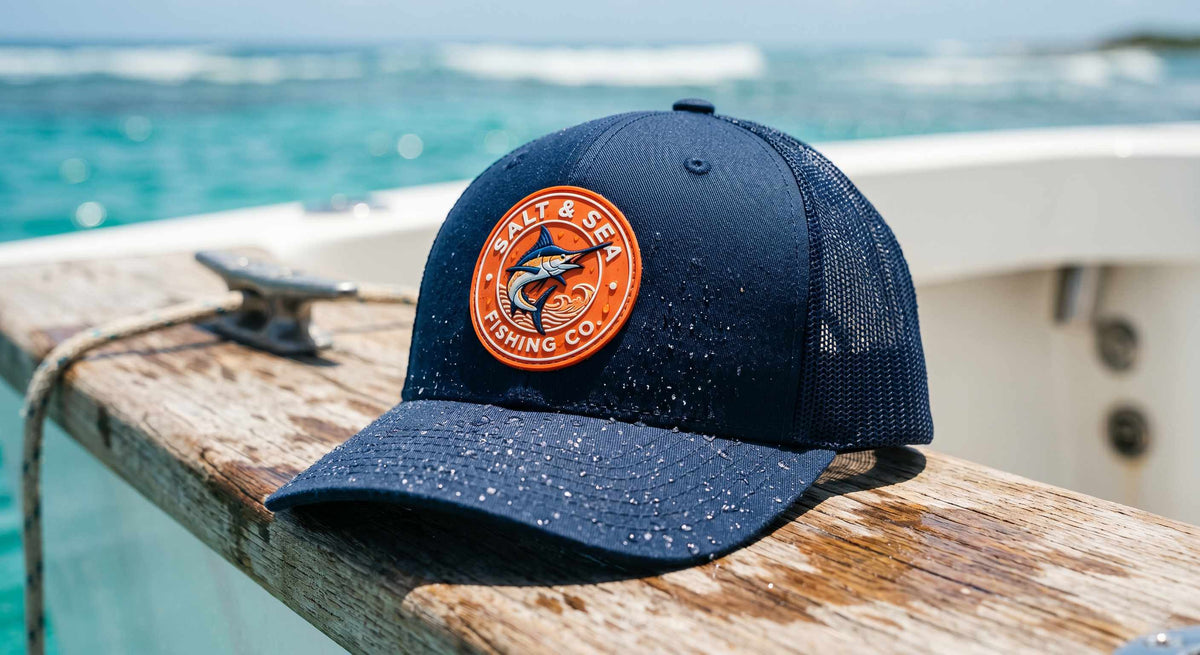
A PVC patch hat is a cap with a molded soft rubber patch sewn to it. The logo is built into the rubber itself, as flat layers of color (2D) or as raised relief (3D). Rubber does not soak up water, does not fade the way thread does, and wipes clean. Marine, tactical, and outdoor brands reach for it first.
The choice that matters most is 2D or 3D, and the sections below settle it by logo rather than by price. They also cover what a molded patch can and cannot hold, and how it behaves in salt and sun. Later sections cover patch size, hat styles, and when another patch type is the better buy. At Griwolfe we make every PVC patch hat in-house, and every patch we make is hand-stitched.
Table of Contents
- What Is a PVC Patch Hat?
- 2D vs. 3D PVC Patches: What Is the Difference?
- What Can You Put on a PVC Patch?
- How Does a PVC Patch Hold Up Outdoors?
- Can You Press a PVC Patch onto a Hat?
- How Big Is the Patch, and Where Does It Go?
- Which Hat Styles Take a PVC Patch Best?
- When Is PVC the Wrong Call?
- How to Order a PVC Patch Hat
- Frequently Asked Questions About PVC Patch Hats
- Pick 2D or 3D and Order One
What Is a PVC Patch Hat?
A PVC patch hat is any cap that carries a molded rubber patch instead of thread, leather, or fabric. PVC is the soft, flexible plastic the patch is made from. Your logo is molded into it in color, the patch is finished with its own border, and then it is hand-stitched to the hat. On a hat, the patch can go on the front, the back, or either side.
PVC is one of five patch types we make, alongside leather, woven, sublimated, and embroidered patches. Our patch hats guide compares all five by logo, look, and wear. This article stays on rubber: the two ways it is made, what it holds, how it wears, and where it belongs.
If you already know you want a rubber patch, browse custom patch hats and open any product page. You can put your logo on the actual hat and see it before you order, with no setup fee and no minimum.
2D vs. 3D PVC Patches: What Is the Difference?

A 2D PVC patch is flat: each color in your logo is its own layer of rubber, and every layer sits at the same level. The surface reads as one smooth plane with crisp edges between colors. A 3D PVC patch is molded with relief. Parts of the design rise above the base at different heights, with rounded edges you can feel under a thumb.
That difference decides which logos suit each type. Wordmarks, text-heavy logos, and clean line art belong on 2D, because a flat surface keeps letter edges sharp. Logos with a shape to them gain from 3D: an animal, a shield, a crest, or a mascot with overlapping parts. The relief separates the parts in a way a flat surface cannot.
3D costs a little more per hat than 2D on the same design. Pay for 3D when the shape earns it. A wordmark in 3D adds cost and softens the letters without adding anything a reader notices.
| Aspect | 2D PVC | 3D PVC |
|---|---|---|
| Surface | Flat; every color on one level | Raised relief; parts sit at different heights |
| Edges between colors | Crisp and stepped | Rounded and sculpted |
| Best logos | Wordmarks, small text, line art, badges | Animals, crests, mascots, shapes with overlap |
| Look on the hat | Clean and technical | Bold and tactile |
| Cost | Base price | A little more per hat |
In the Design Studio you pick Patch as the customization method, then PVC, then 2D or 3D. Your logo shows on the hat either way.
What Can You Put on a PVC Patch?
Custom PVC patches hold solid blocks of color with clean edges between them. Logos with one to about seven or eight flat colors are the sweet spot, and each color can be a specific Pantone number. That is the largest advantage rubber has over embroidery for brand color. A PVC patch matches the Pantone you specify exactly, while thread gets the closest color on a thread chart.
What does not translate is anything built from blends. A smooth gradient, a photograph, or a logo with more than about eight colors has no flat blocks for the mold to follow. Those logos belong on a sublimated patch, which prints full color into fabric with no color limit. Hairline strokes and small type are the other risk, because a mold rounds off detail that thread or a woven patch would keep.
You do not have to judge the small details yourself. After you order, we send a design proof within 1 to 2 business days. On it, we tell you if a line or a letter is too thin to mold cleanly. If it is, the fix is usually thickening the stroke or dropping a tagline, and revisions to the proof are unlimited.
How Does a PVC Patch Hold Up Outdoors?

Rubber does not absorb water, so spray, rain, and sweat roll off a PVC patch without staining it, wicking into it, or leaving mildew behind. A wipe with a damp cloth brings it back. The patch stays flexible from a cold morning on a boat to a hot afternoon on a truck bed. It keeps its color through sun that bleaches thread and dries out leather.
In normal outdoor wear, the hat itself gives out before the patch does. The failure conditions are extreme and slow. A cap that bakes on a dashboard for years, or sits on a boat console through seasons of direct sun, eventually softens and dulls. A hat that is worn, rained on, and hung up between uses looks close to new for years.
Can You Press a PVC Patch onto a Hat?
Not with good results, which is why every patch Griwolfe makes is hand-stitched to the hat. A PVC patch is the clearest case for it. Buyers who try to apply a rubber patch with a hat press at home report the patch melting before it sticks. On a beanie, the same heat can take the elastic out of the knit. Stitching puts no heat on the rubber or the hat, and the thread around the border holds the patch for the life of the cap.
A sewn border also settles the beanie question. A PVC patch goes on a beanie the same way it goes on a trucker cap. The patch is finished first, then stitched to the cuff. Keep the shape simple on knit, such as a circle, a rectangle, or a shield, so the border sits flat.
How Big Is the Patch, and Where Does It Go?
A front patch on a structured cap runs up to 6 inches wide by 3 inches tall, and most logos need less than that. A patch on the front left or front right panel runs up to 2.75 by 2 inches. On the back, above the closure, the patch runs up to 4 by 2 inches, and on either side up to 3 by 2 inches. On a beanie, the patch sits on the cuff at up to 4 by 2.3 inches.
A product's own limit can be smaller than these, and the design proof states the exact patch size in inches before anything is made. To settle it early, hold a ruler to the front of a cap you own and pick the width you want. Then shrink your logo on screen to that width and check whether the smallest text still reads.
Which Hat Styles Take a PVC Patch Best?

PVC fits some hat shapes naturally and fights others, and the signal is as much about the look as the construction. Rubber patch hats read technical, so the patch belongs on hats that already read that way.
Performance and athletic caps. The natural home for a rubber patch. Against moisture-wicking fabric a PVC patch looks like it was designed for the hat, where a leather patch would look borrowed from another category. Marine, tactical, fishing, and running brands order here by default.
Structured truckers and foam truckers. A flat front panel and a firm backing give the stitched border a stable surface. The mesh back keeps the hat cool where the patch gets worn hardest. The Richardson 112 is the common choice. It is a structured six-panel cap with a 60/40 cotton and polyester front, a polyester mesh back, a pre-curved bill, and a snapback closure.
5-panel, flat bill, and snapback caps. A clean fit. The flat front takes a crisp 2D edge without pillowing, and a 3D patch reads bold on a flat bill.
Dad hats. Workable, with a slightly softer read, because the unstructured front curves under the patch, so keep the patch on the smaller side.
Rope hats, heritage silhouettes, and premium 7-panel caps. Possible, but a mismatch. A rope hat reads outdoor-traditional before the logo registers, and a modern rubber patch works against that cue, so leather is the usual call here.
Beanies. A PVC patch is stitched to the cuff, and simple shapes sit flattest on knit.
When Is PVC the Wrong Call?
Rubber is the right answer for outdoor wear, exact color, and clean multi-color logos. Three situations call for a different patch type:
- A heritage or premium look. If the brand wants a leather patch that ages, develops character, and reads upmarket at first glance, PVC is the wrong material. A rubber patch looks the same at year five as it did on delivery. On a bourbon, ranch, or real estate hat, that is a weakness.
- A photographic or gradient logo. Any design with a smooth color blend, a photo, or more than about eight colors goes to a sublimated patch. A mold builds color in blocks and has nothing to do with a fade.
- A small, quiet corporate order. Direct embroidery reads cleaner on a traditional corporate cap and carries no patch setup. PVC is structural and loud by comparison. On a 10-hat executive order, a rubber patch is the expensive way to say something quiet.
How to Order a PVC Patch Hat
Open any hat's product page, click "Start designing," and choose Patch as the customization method in the Design Studio. Pick PVC, then 2D or 3D. Upload your logo or build one from text and shapes, and put your Pantone numbers in the note field. You see the patch on the hat before you add it to the cart.
After you order, we send a design proof within 1 to 2 business days, with unlimited revisions before anything is made. Standard production for patch hats is 4 to 6 weeks from proof approval. Rush is available on request: contact us by phone, email, or live chat before you order, and we confirm what is possible for your date. There is no artwork fee, no setup fee, and Griwolfe offers free U.S. shipping.
There is no minimum: one PVC patch hat is a real order, and ordering one is how to check the patch before a larger run. A single patch hat costs more per unit than the same hat in a run, because patch setup and tooling are expensive at low volume. One-unit orders are not refundable. We make custom hats and apparel in-house in Greensboro, North Carolina, with custom bags coming.
Frequently Asked Questions About PVC Patch Hats
Do PVC patches fade?
Not in normal outdoor use. A PVC patch keeps its color through daily wear, rain, and coastal sun, which is why fishing, marine, and tactical brands choose it. Years of direct sun on a dashboard or a boat console will eventually dull the colors and soften the rubber. That comes from storage, and normal wear never gets there.
Can you machine-wash a hat with a PVC patch?
Hand-washing is safer, and a PVC patch takes it better than leather or a sublimated patch. Use cold water and a mild detergent, and wipe the patch with a cloth. If you do use a machine, choose a gentle cold cycle and a mesh bag. Air-dry only: dryer heat can soften the patch edge and pull it out of shape against the stitching.
Is a 3D PVC patch worth more than a 2D patch?
Only when your logo has sculpted, overlapping, or figurative parts that gain from real relief. Wordmarks, text-heavy logos, and clean line art hold their detail better on 2D and cost less. Choose 3D for the shape, never for the price tag.
Can a PVC patch match my exact brand color?
Yes. Specify a Pantone number and the patch color matches it exactly. Embroidery thread gets the closest color on a thread chart. When the brand color has to be right, a PVC patch is the safer choice.
Can a PVC patch go on a beanie?
Yes. The patch is hand-stitched to the cuff, the same as on every other hat we make. Keep the patch shape simple and the size modest so the border sits flat on the knit.
Does the PVC patch outlast the hat?
In normal wear, yes. The sewn border holds for the life of the cap. Rubber does not fray or fade the way thread and leather can. The fabric, the sweatband, and the closure usually wear out first.
Pick 2D or 3D and Order One
Let the logo choose the type: flat text and line art on 2D, shapes with real relief on 3D. Put the patch on a performance cap, a structured trucker, a 5-panel, or a flat bill. Gradient logos and heritage brands get a different patch type.
When you are ready, design your PVC patch hat on any hat in the collection. You see the patch on the hat before you order and a proof before we make it. Questions about an order? Contact us by phone, email, or live chat.
Share:
Woven Patch Hats: Small Logos and Thin Lettering Stay Sharp
Sublimated Patch Hats: Gradients and Photos on Any Hat Color